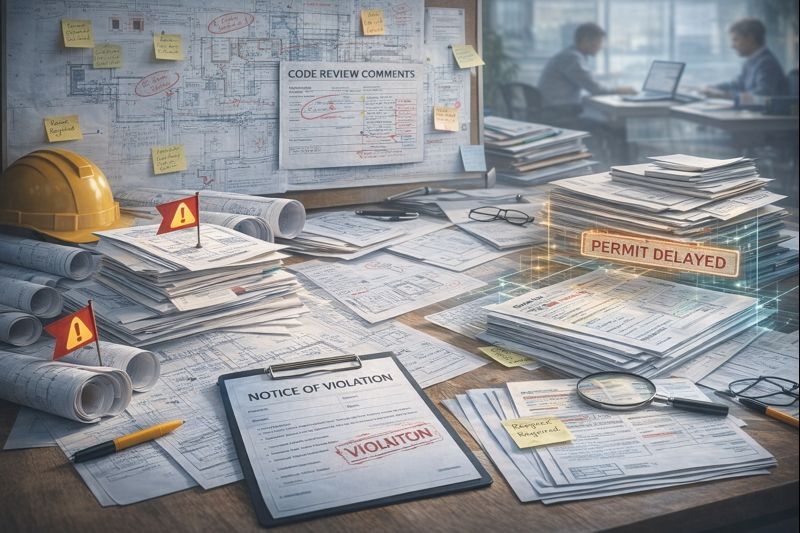
Introduction: Most Bids Are Lost Before Pricing Even Starts
When a bid is lost, teams often blame the number.
Too high.
Too low.
Too aggressive.
But in many cases, pricing was never the real issue.
The real failure happened earlier—quietly—during scope extraction.
Something was assumed instead of verified.
Something was buried instead of surfaced.
Something was read once instead of cross-checked.
By the time pricing began, the bid was already compromised.
This is why tender document AI has become one of the most critical tools in modern AEC bidding—not to price faster, but to understand better.
Why Scope Extraction Is the Most Fragile Step in Tendering
Scope extraction sits at the intersection of speed, complexity, and risk.
Bid teams are expected to:
- read hundreds (sometimes thousands) of pages
- reconcile drawings, BOQs, and specifications
- catch contradictions and omissions
- interpret responsibility correctly
All under compressed deadlines.
This is not a skill issue.
It’s a cognitive overload issue.
Humans are good at judgment—but bad at exhaustive consistency under pressure.
The Illusion of “We’ve Seen This Before”
Experienced estimators rely heavily on pattern recognition.
“This looks like a standard job.”
“We’ve priced similar scopes.”
“This clause is usually harmless.”
That experience is valuable—but dangerous when documents deviate subtly.
Modern tenders often include:
- modified standard clauses
- shifted responsibility boundaries
- hybrid scopes across consultants
- intentionally vague language
Assuming familiarity is how risk enters unnoticed.
AI scope extraction exists to challenge assumptions, not replace experience.
Where Scope Actually Hides in Tender Documents
Many teams focus scope extraction on BOQs and drawings.
But real scope exposure often hides elsewhere:
- general conditions
- employer requirements
- appendices
- performance clauses
- interface descriptions
- footnotes and exclusions
These sections are rarely priced directly—but often define responsibility.
AI tender tools scan across all document types simultaneously, surfacing scope wherever it appears—not just where teams expect it.
Why Manual Highlighting Fails at Scale
Manual scope extraction usually involves:
- highlighting PDFs
- copying notes into spreadsheets
- relying on memory
- dividing documents among team members
This fragments understanding.
One person sees drawings.
Another reads specs.
A third skims contracts.
No one sees the whole picture.
AI-based extraction creates a unified scope view—so contradictions and overlaps become visible early.
Missing Scope Is More Dangerous Than Extra Scope
Extra scope can be negotiated or value-engineered.
Missing scope becomes:
- unpriced obligation
- dispute trigger
- margin leak
Once a project is awarded, missing scope rarely disappears. It migrates into delivery—and resurfaces as claims, rework, or strained relationships.
AI scope extraction reduces this risk by flagging absence, not just presence.
How AI Scope Extraction Actually Works (Without Hype)
Good tender document AI does not “understand” projects like a human.
Instead, it:
- identifies scope-related language
- maps recurring obligations
- cross-references mentions across documents
- highlights inconsistencies
- flags undefined responsibilities
The output is not a decision.
It’s visibility.
Humans still decide:
- what to include
- what to exclude
- what to clarify
- what to price as risk
But they decide with more complete information.
Why Scope Clarity Improves RFIs and Clarifications
Many RFIs are reactive—asked after confusion arises.
AI-assisted scope extraction allows teams to:
- identify unclear areas early
- raise targeted clarifications
- avoid generic questions
- document assumptions explicitly
This improves bid quality and protects teams later when interpretations are challenged.
The Downstream Impact of Better Scope Extraction
When scope is clear at bid stage:
- pricing is intentional
- exclusions are defensible
- delivery teams inherit fewer surprises
- disputes reduce
- margins stabilize
The benefit compounds over the project lifecycle.
This is why scope extraction is not just a bid task—it’s a risk control strategy.
From Scope Intelligence to Execution Reality
Tender intelligence loses value if it disappears after award.
If delivery teams don’t know:
- what was assumed
- what was excluded
- where risk was accepted
they repeat discovery under pressure.
This is where platforms like Ruwaq Design extend tender scope intelligence into execution—connecting bid assumptions to coordination, project controls, and delivery workflows.
What was identified early stays visible later.
Why tenderaec.com Owns This Conversation
The mission of tenderaec.com is not to talk about AI features.
It’s to explain why bids fail quietly.
By focusing on:
- scope visibility
- interpretation risk
- document overload
- assumption management
the domain becomes a trusted resource for bid managers, commercial directors, and pre-con teams who already know the pain—but need better tools to control it.
Authority is built by naming the real problem.
Conclusion: Scope Extraction Is Where Bids Are Won or Lost
Pricing decides competitiveness.
Scope decides survival.
Most bid failures don’t come from bad math.
They come from incomplete understanding.
Tender document AI doesn’t remove judgment.
It removes blindness.
Firms that master scope extraction don’t just win bids—they win projects they can actually deliver.