Winning Bids Shouldn’t Feel This Risky
Tendering is where AEC firms spend enormous effort—with no guarantee of return.
Teams work nights.
Documents pile up.
Deadlines compress.
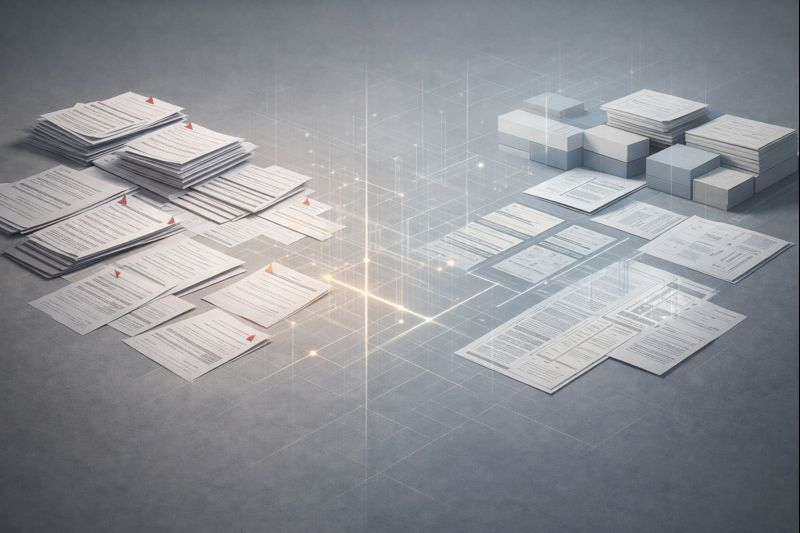
Risk hides in PDFs.
And despite all that effort, many bids are lost not because pricing was wrong—but because scope, compliance, or risk was misunderstood.
Tendering is not failing because teams lack experience.
It’s failing because the process is overloaded, manual, and fragile.
AI tender management exists to fix how bids are understood, not just how fast they’re submitted.
Short Briefing
This article is written for:
- engineering firms
- contractors & design–build teams
- pre-construction managers
- bid & proposal teams
- commercial directors
If your tenders rely on spreadsheets, emails, and human memory, this pillar speaks directly to your risk.
The Reality: Tendering Is Document Hell
Modern tenders arrive as:
- massive PDFs
- mixed formats
- unclear scopes
- conflicting drawings
- vague clauses
- last-minute addenda
Teams are expected to:
- extract scope
- identify exclusions
- ensure compliance
- assess risk
- price accurately
All under extreme time pressure.
This is not a human-friendly problem.
Why Most Bid Mistakes Are Invisible Until It’s Too Late
Tender failures rarely look dramatic at submission.
Problems surface later as:
- missing scope
- underestimated risk
- contractual exposure
- unpriced requirements
- compliance gaps
By the time issues appear, the bid is already won—or lost.
AI tender tools don’t just speed up bidding.
They surface hidden problems early, when decisions still matter.
The Illusion of Control in Spreadsheet-Based Tendering
Spreadsheets give a sense of control—but hide fragmentation.
Scope analysis lives in one file.
Risk notes live in emails.
Compliance lives in someone’s head.
Clarifications live in chat messages.
No single place tells the full story of the bid.
This fragmentation is why tendering feels stressful even for experienced teams.
Why Experience Alone Is No Longer Enough
Senior estimators rely on pattern recognition.
But modern tenders are:
- larger
- faster
- more complex
- more legally aggressive
No individual—no matter how experienced—can reliably track every clause, drawing note, and exception manually.
AI doesn’t replace experience.
It extends it, ensuring nothing critical slips through.
What AI Tender Management Actually Fixes
AI tender systems help teams:
- extract scope automatically
- flag missing or ambiguous items
- highlight compliance risks
- compare addenda changes
- standardize bid reviews
This shifts tendering from reactive to controlled.
And when bid intelligence needs to connect to downstream delivery—estimating, coordination, project controls—that’s where Ruwaq Design naturally extends tender data into execution workflows.
Why Tendering Fails at Scale
Small firms survive on hero effort.
Large firms struggle with consistency.
As bid volume increases:
- reviews become rushed
- assumptions go undocumented
- compliance checks weaken
- risk acceptance becomes implicit
AI tender management introduces repeatable discipline without slowing teams down.
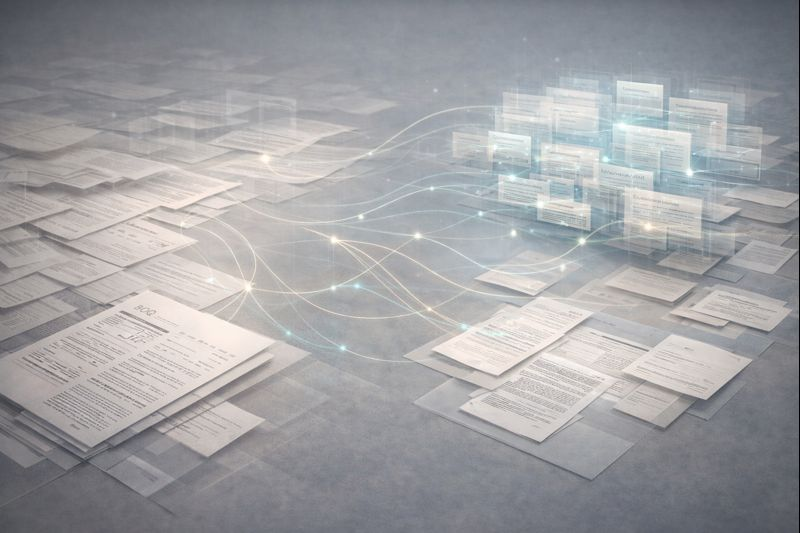
How AI Tender Analysis Turns Documents Into Bid Intelligence
Tendering Fails at Interpretation, Not Effort
Most bid teams don’t lose tenders because they didn’t work hard enough.
They lose because they interpreted the documents differently than reality required.
A scope item was assumed, not stated.
A clause was read once, not cross-checked.
A drawing note contradicted the BOQ quietly.
An addendum arrived late and shifted responsibility.
The effort was there.
The interpretation failed.
AI tender analysis exists to reduce interpretation risk—not replace human judgment.
What “Understanding a Tender” Actually Means
Understanding a tender is not just reading documents.
It means answering questions like:
- What is explicitly included?
- What is implied but not stated?
- What is excluded but assumed by the client?
- Where do documents conflict?
- Which clauses shift risk unfairly?
- What changed between addenda?
Humans answer these questions intuitively—until volume, speed, and complexity overwhelm intuition.
AI assists by making these questions systematic, not optional.
Scope Extraction: Seeing What’s Actually There
The first failure point in tendering is scope extraction.
Most teams:
- skim documents
- highlight manually
- rely on memory
- assume consistency
AI tender systems scan across:
- specifications
- BOQs
- drawings
- schedules
- clarifications
They identify:
- scope mentions
- repeated requirements
- hidden obligations
- inconsistencies between documents
This doesn’t decide pricing—but it ensures pricing decisions are based on complete visibility, not partial reading.
Why Missing Scope Is More Dangerous Than Wrong Pricing
Wrong pricing can be corrected in negotiation.
Missing scope becomes your problem after award.
AI helps teams spot:
- scope gaps
- unpriced responsibilities
- items buried in specifications
- assumptions that need clarification
This allows teams to:
- include costs
- raise RFIs
- add exclusions
- adjust risk pricing intentionally
That single shift—from assumption to visibility—changes bid quality dramatically.
Compliance Checking Without Human Fatigue
Compliance is where bids quietly die.
Not because teams ignore it—but because:
- checklists are manual
- clauses are repetitive
- fatigue sets in
- edge cases get missed
AI tender tools check:
- mandatory clauses
- submission requirements
- technical compliance
- deviations from employer requirements
They don’t replace review—they reduce blind spots.
Human reviewers stay focused on judgment instead of hunting for needles in PDFs.
Risk Flags: Making Hidden Exposure Visible
Some tender risks are obvious. Others are subtle.
AI highlights:
- unusually aggressive clauses
- responsibility transfers
- undefined interfaces
- contradictory requirements
- missing performance definitions
This allows bid teams to discuss risk explicitly, instead of discovering it during delivery.
Risk doesn’t disappear—but it becomes priced, excluded, or mitigated intentionally.
Addenda Comparison: Where Most Teams Lose Control
Addenda are where tender control collapses.
Teams rush.
Changes stack up.
Old assumptions remain.
AI comparison tools track:
- what changed
- where it changed
- how it impacts scope and risk
This prevents outdated assumptions from silently surviving into final submission.
Bid Leveling Without Spreadsheet Chaos
When subcontractor and vendor quotes arrive, chaos begins.
Different formats.
Different assumptions.
Different exclusions.
AI-assisted bid leveling:
- standardizes scope comparison
- highlights mismatches
- exposes exclusions clearly
Instead of guessing which number is “safe,” teams make informed commercial decisions.
Humans Still Decide — AI Makes the Decision Safer
AI doesn’t tell teams:
- what to price
- what to accept
- what to exclude
It tells them:
- what exists
- what conflicts
- what carries risk
Decision authority stays human.
Decision quality improves.
From Bid Intelligence to Project Reality
A winning bid is not a finish line—it’s a starting point.
If tender intelligence disappears after award:
- delivery teams inherit surprises
- disputes escalate
- margins erode
This is where platforms like Ruwaq Design extend tender intelligence into execution—linking bid assumptions, scope, and risk directly into coordination and delivery workflows.
When what you bid is what you deliver, projects stay controlled.
How AI Tendering Reduces Claims, Protects Margins, and Improves Project Selection
Winning the Wrong Bid Is Still Losing
In AEC, not all wins are equal.
Some projects look profitable at award and collapse during delivery.
Others feel risky at bid stage and become smooth, predictable jobs.
The difference is rarely luck.
It’s how well the tender was understood, priced, and qualified.
AI tendering doesn’t exist to help firms win more bids.
It exists to help them win the right ones.
Why Claims Often Begin at Tender Stage
Most disputes trace back to assumptions made before contract award.
Common examples:
- scope items assumed “standard”
- responsibilities buried in specs
- conflicting drawings ignored
- risk clauses underestimated
- exclusions not clearly documented
Once the contract is signed, interpretation shifts.
What was ambiguous becomes binding.
AI tendering reduces claims by forcing clarity early, when risk can still be managed intentionally.
Claims Are Rarely Caused by Bad Delivery Teams
Delivery teams inherit the consequences of bid decisions.
When claims arise, they often stem from:
- unpriced scope
- misunderstood interfaces
- unclear responsibility boundaries
- aggressive contract terms accepted unknowingly
Blaming delivery misses the point.
AI tender analysis strengthens the handoff from bid to execution—so projects begin with fewer hidden landmines.
How Better Tendering Protects Margins
Margins erode quietly:
- through scope absorption
- through defensive redesign
- through reactive coordination
- through unplanned risk management
AI tendering protects margins by ensuring:
- scope is fully visible
- assumptions are explicit
- exclusions are deliberate
- risks are priced or mitigated
Profitability improves not by charging more—but by surprising less.
Directors Need Portfolio Visibility, Not Just Bid Results
Most firms track:
- number of bids
- win/loss ratios
- bid value
Few track:
- risk profile of wins
- recurring scope gaps
- contract exposure trends
- reasons for disputes months later
AI tender platforms enable portfolio-level insight:
- Which clauses keep appearing?
- Which clients create the most downstream issues?
- Which bid types erode margins?
- Where are assumptions consistently wrong?
This turns tendering into a strategic function—not just an operational one.
Better Tendering Improves Delivery Culture
When bids are clearer:
- delivery teams trust bid assumptions
- coordination is proactive
- claims posture is defensive only when necessary
- teams spend more time building, less time arguing
Culture improves because friction decreases.
AI tendering doesn’t remove pressure—but it removes uncertainty, which is often worse.
Why Firms Start Saying “No” More Often — and Do Better
One of the most valuable outcomes of AI tendering is selective discipline.
Firms begin to:
- identify high-risk tenders early
- walk away intentionally
- negotiate terms with confidence
- focus effort where odds are fair
Saying “no” strategically improves:
- win quality
- team morale
- long-term profitability
Winning fewer—but better—projects is a sign of maturity, not weakness.
From Tender Intelligence to Full AEC Execution
Tender intelligence has value only if it survives award.
If scope assumptions, exclusions, and risk flags disappear:
- delivery teams repeat discovery
- disputes resurface
- margins leak
This is where platforms like Ruwaq Design extend tender intelligence into execution—linking bid scope, risk, and assumptions directly into coordination, project controls, and delivery workflows.
What you bid becomes what you manage.
Why tenderaec.com Becomes an Authority Domain
The role of tenderaec.com is not to sell software.
It’s to explain why tenders fail quietly—and how to prevent it.
By focusing on:
- interpretation risk
- compliance discipline
- contract exposure
- portfolio intelligence
the domain earns trust from:
- directors
- commercial managers
- bid leaders
- pre-construction teams
That trust naturally flows to deeper execution platforms when projects demand it—without forced promotion.
Authority comes from preventing pain early.
The Bigger Shift: Tendering Becomes Risk Engineering
Tendering used to be about speed and pricing.
Now it’s about:
- risk identification
- responsibility clarity
- assumption control
- portfolio intelligence
AI tendering turns bidding into a risk engineering discipline, not just a commercial race.
Firms that adapt don’t just survive competitive markets.
They choose projects they can actually deliver well.
Final Conclusion
Tendering is the most underestimated risk point in AEC.
AI doesn’t make bidding easy.
It makes it honest.
By surfacing scope, compliance, and risk early, AI tendering reduces disputes, protects margins, and improves project selection.
The firms that win tomorrow won’t be the fastest bidders.
They’ll be the clearest thinkers.